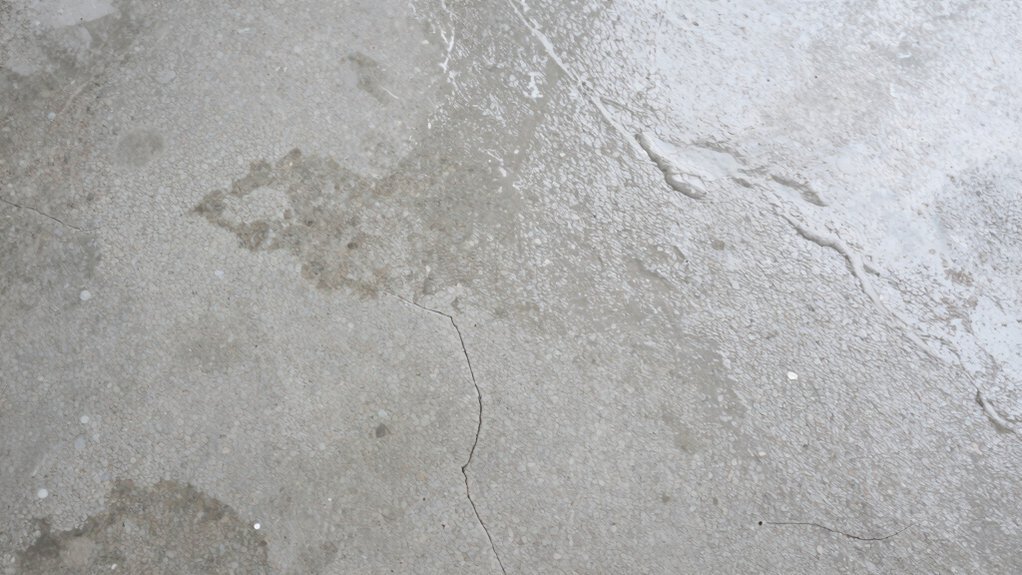
If you don’t seal concrete floors, moisture and chemicals can penetrate the surface, accelerating wear and deterioration. Capillary action draws in water, salts, and acids, leading to microcracking, surface roughening, and potential spalling under load. You’ll see efflorescence, staining, and color fading, plus reduced slip resistance and harder cleaning. Over time, recurring moisture cycles increase maintenance costs and shorten lifespan. If you keep going unsealed, you’ll face higher repair needs—and you’ll miss steps that protect durability, performance, and cost. You’ll learn more next.
Should I Seal Concrete? Why Sealing Matters for Long-Term Durability
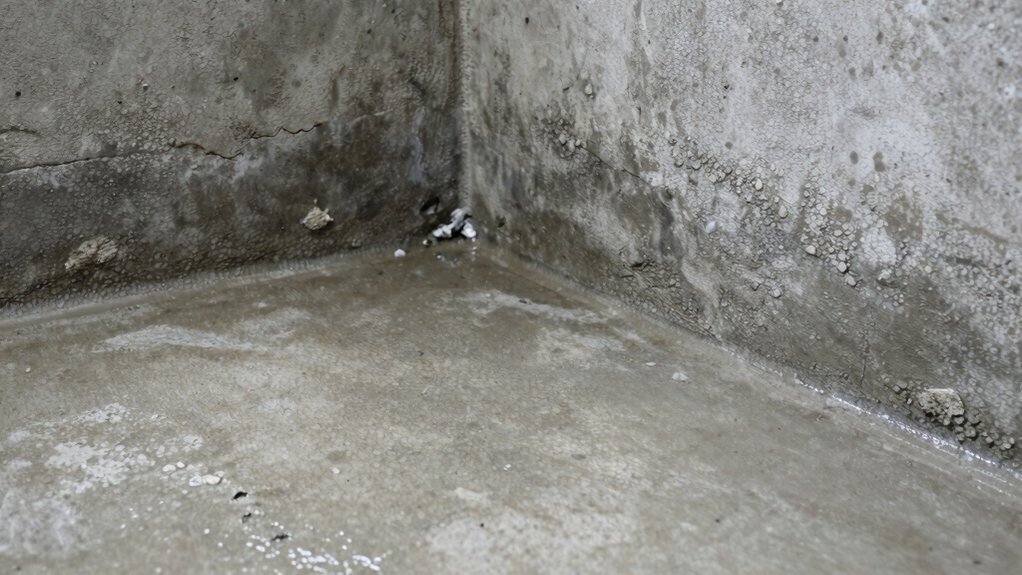
Sealing concrete prevents water and chemical penetration that can cause early deterioration, so you should seal surfaces that are exposed to moisture, salts, or acids. You assess whether sealing is appropriate by considering exposure, traffic, and chemical interactions.
Sealing reduces moisture ingress and slows chemical reactions that weaken paste and aggregate bonds, improving long-term durability. It also preserves surface texture by limiting abrasion and surface wear, maintaining slip resistance and visual quality.
Choose a sealant compatible with the concrete chemistry, climate, and cleaning regime to minimize adverse reactions and coating delamination. Evidence shows that properly applied sealers reduce capillary pore connectivity, decreasing absorptivity and salt scaling.
In high-alkaline or acidic environments, select formulations with proven resistance to aggressive ions, ensuring consistent performance over service life.
What Happens to Unsealed Concrete Over Time
Unsealed concrete is progressively more vulnerable to moisture, chemicals, and wear, leading to measurable deterioration over time. You observe increased surface roughness and minor scaling as capillary pores draw water and dissolved salts. Repetitive wetting and drying cycles promote freeze–thaw cycling in temperate climates, generating microcracks that propagate under load.
Without a barrier, efflorescence may appear where soluble salts migrate to the surface, signaling underlying moisture pathways. In heavy-traffic environments, abrasion accelerates matrix loss, reducing compressive strength locally and raising needs for maintenance.
Chemical exposure from cleaners or deicers can alter surface hardness and polish, increasing slickness and cleaning difficulty. Over years, cumulative damage erodes sealing benefits indirectly, shortening concrete lifespan and elevating replacement or resurfacing costs.
Regular assessment guides proactive interventions to preserve performance and durability.
How Sealing Prevents Stains and Spills From Penetrating
Moisture and contaminants infiltrate concrete primarily through capillary pores and microcracks, so applying a sealing layer modifies how liquids interact with the surface. When you use proper sealing techniques, spills bead up and resist deeper penetration, reducing stain formation and cleanup effort. The seal creates a barrier that slows water and oil ingress, giving you time to address spills and preventing watermarking on dense concrete.
Effective concrete preparation ensures the coating adheres uniformly, maximizing performance and longevity. Proper substrate cleaning, patching, and moisture assessment are essential before application.
- Surface cleaning and dust removal
- Crack and fault repair
- Absorbent substrate priming if required
- Uniform product application and curing conditions
- Post-application inspection for uniform sealant film
Moisture and Unsealed Concrete: What It Does to Surfaces
Moisture migrates through unsealed concrete, leading to capillary action that can transport dissolved salts and contaminants to the surface.
This movement increases surface moisture, promotes efflorescence, and accelerates microcracking and surface spalling under load.
Recognizing these mechanisms helps you assess early deterioration risks and the value of timely sealing.
Moisture Migration Effects
When concrete floors lack a seal, moisture moves through the substrate as water vapor and liquid transport, increasing humidity pockets at the surface and within pores. You’ll observe directional diffusion, capillary rise, and potential pressure gradients that drive salt and mineral deposition, accelerating efflorescence.
This migration can alter vapor permeability, skew readings on moisture meters, and complicate coating adhesion. Without barriers, pore water can promote microcracking and delamination in subsequent toppings, undermining performance.
Implementing sealing techniques reduces ingress paths, stabilizes relative humidity, and limits differential movement between substrate and overlay. Early intervention supports long-term durability and surface finish quality, especially under fluctuating temperature and humidity.
Use moisture barriers in conjunction with proper pour cures to minimize internal stress and moisture-driven defects.
- sealing techniques
- moisture barriers
- diffusion control
- pore saturation limits
- adhesive compatibility
Surface Deterioration Risks
Unsealed concrete exposes surfaces to ongoing moisture movement, which accelerates surface degradation through salt crystallization, efflorescence, and microcracking. You’ll observe surface discoloration as salts migrate to the surface and interact with lighting, revealing whitish blooms or ashen tones that hint at underlying moisture flux.
Repeated wetting and drying cycles promote loss of capillary cohesion, leading to microcracking that can trap dirt and foster abrasive wear. Over time, pad deterioration may occur at high-traffic zones where coatings or toppings fail to accommodate moisture swings, producing delamination and spalling risks.
Without sealing, abrasion compounds penetrate pathways, accelerating aggregate exposure and dusting. Evidence-based maintenance shows that timely sealing reduces vapor transmission, slows salinity effects, and preserves surface integrity, limiting long-term deterioration and associated remediation costs.
Cracking, Efflorescence, and What It Means for Structure
Cracking and efflorescence signal moisture- and load-related stresses that can alter structural performance, so you’ll want to quantify crack patterns, widths, and salts presence for risk assessment.
You’ll see how restrained shrinkage, moisture fluctuations, and improper curing contribute to crack propagation, which can compromise shear and flexural capacity over time.
This section introduces the mechanisms and early indicators you should monitor to gauge potential structural implications and guide remediation decisions.
Cracking Risks Revealed
Cracking, efflorescence, and their implications for structural integrity become clear once you recognize that moisture movement and concrete restraint drive most damage. You’ll see cracking arise from recurring shrinkage, thermal cycles, and differential settlement, while efflorescence signals salt transport through capillary action.
Together, these phenomena can reduce stiffness and promote microcracking that escalates under loads. Adopting appropriate sealing techniques limits moisture ingress and slows salt migration, enhancing long-term performance.
Concrete additives can modify hydration, plastic shrinkage, and pore structure, further mitigating crack development.
- moisture pathways and restraint interactions
- effect of shrinkage on crack initiation
- role of temperature cycles in crack propagation
- signs that efflorescence predicts cracking risk
- practical implications for maintenance and repair planning
Structural Impact Details
Moisture movement and restraint don’t just cause aesthetic flaws; they define how a concrete floor behaves under load and over time. When unsealed surfaces experience moisture exchange, you see differential swelling and shrinkage that promote crack initiation, propagation, and potential delamination under stress.
Cracking often follows tensile zones where restraint meets high thermal and load gradients, while efflorescence indicates salt migration driven by chemical reactions and moisture, signaling ongoing ingress rather than mere surface staining. These phenomena can alter stiffness, load transfer, and architectural compatibility, affecting long-term performance.
You’ll observe increased maintenance, reduced service life, and risk of spalling at joints if seals are neglected. Thorough sealing mitigates water-driven chemical reactions, curbing aesthetic changes and preserving structural integrity under repeated loading.
How Color Holds Up or Fades Without a Seal
Without a seal, color on concrete floors is more vulnerable to environmental factors, so it can fade or shift unevenly over time. You’ll observe color fade from UV exposure, moisture cycles, and abrasion, reducing saturation and uniformity.
Without sealing, pigment penetration remains shallow, making color more susceptible to surface wear and staining. Aesthetic durability declines as finish sheen degrades and disparate areas discolor differently under traffic.
- UV-driven degradation reduces pigment brightness
- Moisture ingress causes efflorescence-related color shifts
- Abrasion from foot traffic creates uneven wear patterns
- Contaminants penetrate more readily, causing staining
- Thermal cycles alter surface microstructure, affecting tone
If you aim for predictable outcomes, monitor color stability, select coatings with proven UV resistance, and prioritize surface preparation to support long-term aesthetic durability.
Mold, Mildew, and Odor Risks on Unsealed Floors
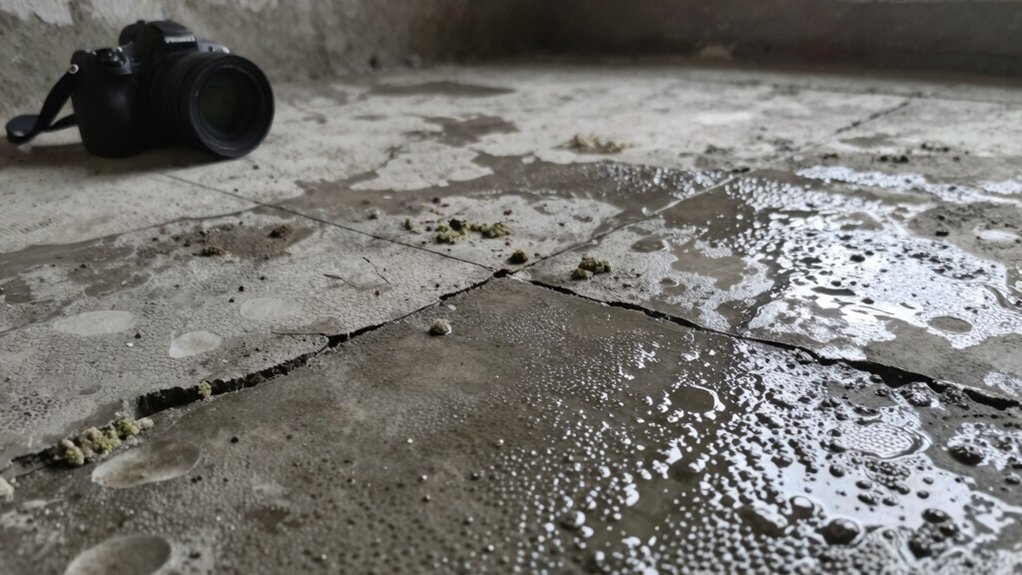
Unsealed concrete floors create a more permissive environment for mold, mildew, and odor development due to ongoing exposure to moisture and organic matter. In such conditions, you may observe accelerated mold growth on surface and in microcracks where dampness persists, especially in basements, garages, and bathrooms.
Moisture ingress without a protective seal allows capillary action to transport contaminants and create damp niches favorable to fungal colonies. Odor development accompanies microbial activity, producing musty or sour notes that can permeate adjacent materials.
Regular monitoring of humidity and surface moisture helps you detect early signs of contamination. While porosity alone isn’t a diagnosis, unsealed floors increase the risk of sustained moisture retention, making prompt, targeted mitigation essential to limit mold growth and odor development.
Maintenance and Cost Implications: Sealing vs. Repairs
Sealing concrete floors offers a cost-effective, preventive approach that often outweighs frequent repairs after moisture intrusion. You’ll compare upfront sealing costs with long-term repair expenses, moisture-related downtime, and labor.
Evidence suggests sealing benefits include reduced capillary rise, slowed degradation, and fewer surface treatments over time, improving overall durability. Maintenance routines become predictable, with periodic reapplication aligning to wear patterns rather than reactive fixes.
You may also avoid mold-related remediation costs and extended interior downtime. However, improper sealing or delayed maintenance can negate benefits, increasing annualized costs.
Plan maintenance budgets around surface condition checks, humidity control, and coating schedules. Choose sealants compatible with your substrate and traffic level to maximize life-cycle value.
- sealing benefits
- maintenance routines
- upfront vs long-term costs
- durability and wear
- routine checks and schedules
Making the Call: How to Decide If Sealing Is Right for Your Space
Deciding whether to seal your concrete floor starts with a clear assessment of moisture exposure, traffic, and maintenance capacity. In practical terms, you quantify humidity levels, permeance, and surface wear to determine necessity. If moisture intrusion or staining is likely, sealing offers a defensible risk reduction; if impact loads and routine cleaning are minimal, sealing may provide marginal benefit.
Consider your environment: bathrooms, garages, or basements justify stricter criteria for durability and long-term maintenance. The decision hinges on the balance between cost, downtime, and expected performance.
If you proceed, plan sealant application during stable ambient conditions and implement thorough surface preparation to ensure adhesion and uniform coverage. Document outcomes to refine future choices; re-evaluate periodically as use and moisture dynamics evolve.
Frequently Asked Questions
Can Unsealed Concrete Affect Indoor Air Quality Long-Term?
Yes, unsealed concrete can affect indoor air quality long-term by promoting moisture infiltration and mold growth, which release spores and volatile compounds; these factors worsen respiratory symptoms and indoor pollutant loads, requiring monitoring and proper sealing.
Do Color and Finish Impact Unsealed Floor Aesthetics?
Color variation and finish durability do influence unsealed floor aesthetics; you’ll notice dramatic shifts in tone and sheen with exposure. You’re evaluating color variation, finish durability, and you’ll see subtle to striking changes over time in appearance.
How Do Unsealed Floors Impact Allergy Risks?
Unsealed floors increase your allergy risks by promoting dust accumulation and mold growth. You’ll breathe more particulates, triggering congestion and irritation, while moisture promotes microbial activity. Regular cleaning helps, but sealing reduces dust and microbial load effectively.
Can Sealing Delay Maintenance and Recoating Needs?
Sealing benefits include delaying maintenance and recoating, because moisture and contaminants are slowed, giving you longer intervals. You’ll notice fewer surface defects as seals shield pores; maintenance delays come from improved durability, reduced staining, and easier cleaning routines.
Do Unsealed Floors Deter Pests or Attract Insects?
Unsealed floors don’t inherently deter pests; they can slightly increase moisture pockets. You’re more likely to see pest attraction if moisture and organic debris accumulate. Insect deterrence depends on sealing efficiency and cleanliness, not airflow alone.
Conclusion
You’ll love the “good old concrete” look when you skip sealing, right up until stains, moisture, and cracks prove you wrong. Without a seal, liquids soak in, dyes bleed, and efflorescence shows off like a badge. Cracks widen, color fades, and odors linger—why bother fighting it? Sealing isn’t magic, just evidence-based defense: slows damage, reduces repair costs, and keeps surfaces predictable. If you value durability, you’ll seal. If not, enjoy the surprises.