
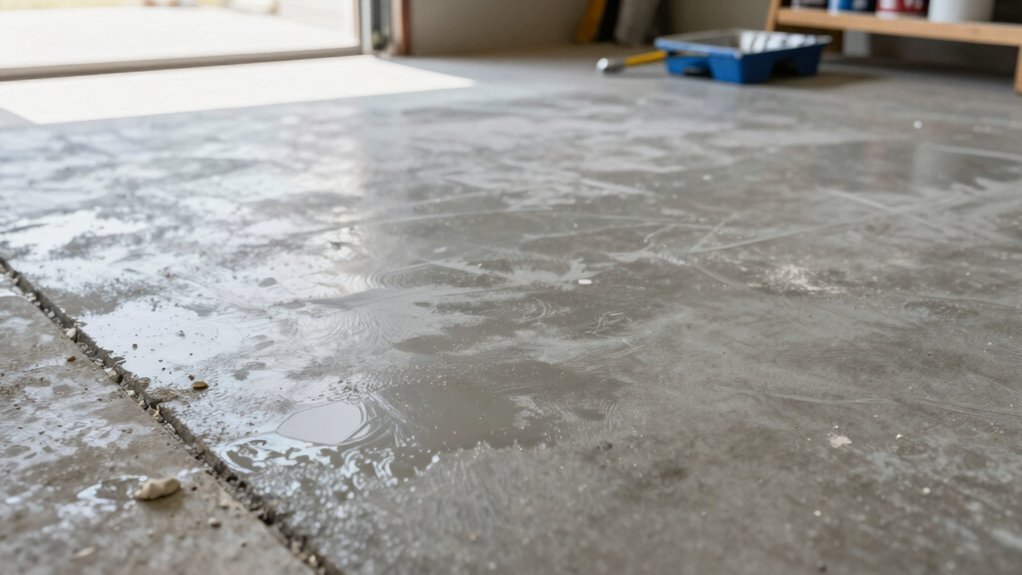
Yes—you should seal the garage floor before painting if your slab is porous, damp, stained, or prone to moisture. Sealing creates a uniform, moisture-resistant surface, improves adhesion, and helps prevent peeling and tire marks. Choose a sealer that fits your floor and planned coating, clean and repair cracks first, and let it fully dry. Then apply paint or coating per the manufacturer’s instructions. If you keep going, you’ll learn how to pick the right sealer and timing.
Seal Before Painting Garage Floors? Quick Answer
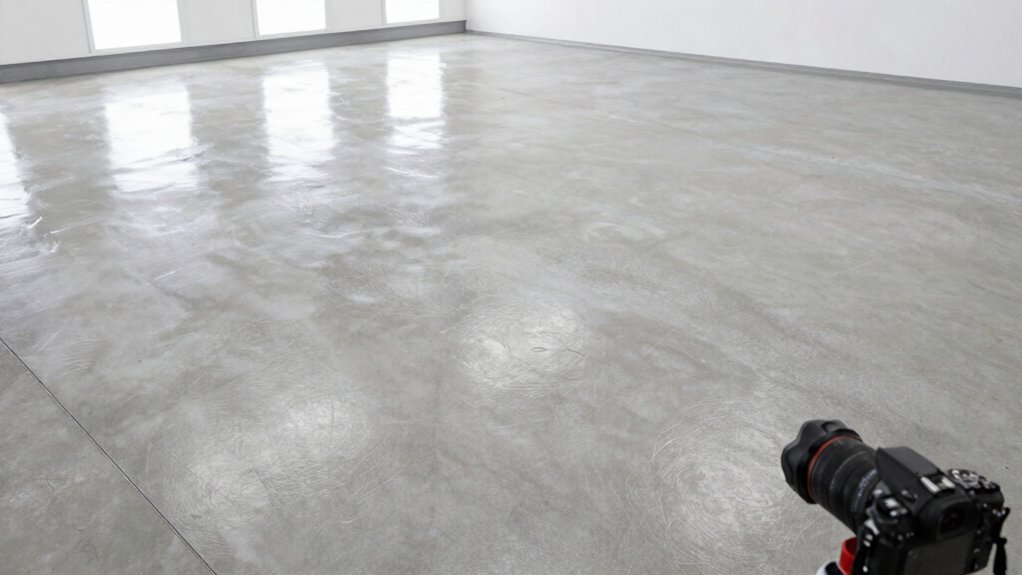
Yes—seal before painting garage floors. You should seal if moisture, stains, or coatings could undermine adhesion. A sealant creates a uniform surface, fills small pores, and reduces porosity so paint bonds consistently.
For garage maintenance, sealing benefits include easier cleanup, fewer tire markings, and longer paint life. Choose a compatible epoxy or penetrating sealer based on your floor type and usage. Prepare by cleaning thoroughly, repairing cracks, and drying the slab.
Apply the product as directed, usually in thin, even coats, with adequate ventilation. Allow full cure before applying primer or paint. If you skip sealing, you risk pinholes, peeling, and uneven color.
In short, sealing before painting improves adhesion, durability, and overall results.
When Sealing Helps: Criteria for Your Concrete
Sealing helps when your concrete shows moisture, stains, or high porosity that could hinder adhesion. You’ll know sealing helps when you see damp patches, efflorescence, or a chalky surface that soaks up water quickly.
Assess porosity by placing a small amount of water; rapid sinking means you likely need sealing to create a uniform surface. If you plan a garage aesthetics upgrade, sealing durability matters to keep paints from peeling and to preserve a tidy look.
Structural repairs should be complete before sealing, and cracks must be addressed to prevent moisture pockets. Choose a compatible sealer, apply evenly, and follow curing times precisely.
This approach minimizes dust, improves coating consistency, and supports long‑term maintenance without unnecessary steps.
How to Pick the Right Sealer for Your Floor
Choosing the right sealer starts with understanding your floor’s needs: porosity, moisture risk, traffic, and whether you’ll be painting or staining. To pick wisely, assess porosity and surface condition first, then match product strength to expected wear.
For garage floors, stay practical: select a sealant type that resists oil, chemicals, and UV fading, if applicable. Consider moisture risk—use a breathable option if moisture is a concern, or a moisture-blocking formula for damp slabs.
Match curing time to your schedule, and align compatibility with any coatings you plan to apply later. Compare sealant types by performance, not price alone.
Pay attention to application techniques: roller, brush, or spray, surface prep requirements, and temperature guidelines. Choose a proven brand and follow label directions for best results.
Prep for Paint: Clean, Repair, and Seal Correctly
Before painting, get the garage floor clean, repair any damage, and seal correctly to guarantee adhesion and longevity. Start with a thorough sweep to remove dust, oils, and debris, then scrub with a degreaser for stubborn spots.
Repair cracks, chips, and pitting using compatible filler, let cure fully, and vacuum again. Choose a cleaner that’s compatible with your sealing method, then rinse and air-dry completely.
Inspect for moisture and address underlying leaks before sealing. Apply primer if required by the sealer, and follow manufacturer directions for curing times.
When sealing, use even coats to avoid puddling, and keep traffic off until dry. This prep supports solid garage flooring performance and highlights sealing benefits, reducing future maintenance and promoting lasting protection.
Painting First or Sealing After: Timing and Best Practices
You’ll want to decide whether to paint first or seal after based on the product requirements and your floor’s condition. In most cases, sealers go down first to create a stable, bonded, moisture-resistant surface. Then paint over the sealed layer if the paint is compatible.
If you choose to paint first, verify that the coating adheres to a sealed substrate later and won’t peel with moisture exposure. For best garage floor durability, follow manufacturer instructions for cure times between steps, and test a small area first.
Consider sealing cost as part of the project budget, since higher-quality sealers improve adhesion and resist chemicals. Plan a clear sequence, allow appropriate drying intervals, and document any surface prep changes to avoid rework.
Frequently Asked Questions
Will Sealing Affect Paint Color or Finish Over Time?
Sealing can affect color retention slightly, but using the right sealant compatibility guarantees consistent finish. You’ll protect the floor from wear while maintaining color stability; choose products that match your paint and substrate for best results.
How Long Does Sealer Cure Before Painting a Garage Floor?
Sealer cures typically 24 to 72 hours before painting, depending on product and conditions, so plan accordingly. You should allow full curing, maintain dry temperatures, and avoid traffic during sealer application and curing time. Follow manufacturer directions.
Can Floor Sealer Be Applied Over Existing Paint?
Yes, you can apply floor sealer over existing paint if you prep properly. Do floor preparation by cleaning, sanding glossy spots, and repairing peeling areas; check sealer compatibility with your paint type before proceeding.
Is Moisture Trapped Under Sealer a Risk for Garage Floors?
Yes, moisture trapped air can be a risk, but you can prevent issues with proper prep and ventilation. You’ll avoid moisture accumulation by ensuring a dry surface, using breathable coatings, and sealing edges to control humidity and air flow.
Are There Odor or Health Concerns With Commonly Used Sealers?
Yes, there can be odor concerns and health risks with common sealers. Ventilate well, wear a respirator, and follow label directions. Use low-VOC products when possible, and avoid skin contact; cure times and ventilation are essential for safety.
Conclusion
Seal after you’ve prepped clean and repaired the concrete, and only seal if the surface looks thirsty or shows cracks. If you can touch up paint later without peeling, you’re fine to seal first; otherwise, seal after painting to lock in color and resist moisture. Hit the prep steps in the same day, keep it practical, and don’t rush. It’s a tight ship, so you’ll dodge chipping and prolong your garage floor’s life—think of it as laying a strong foundation.