
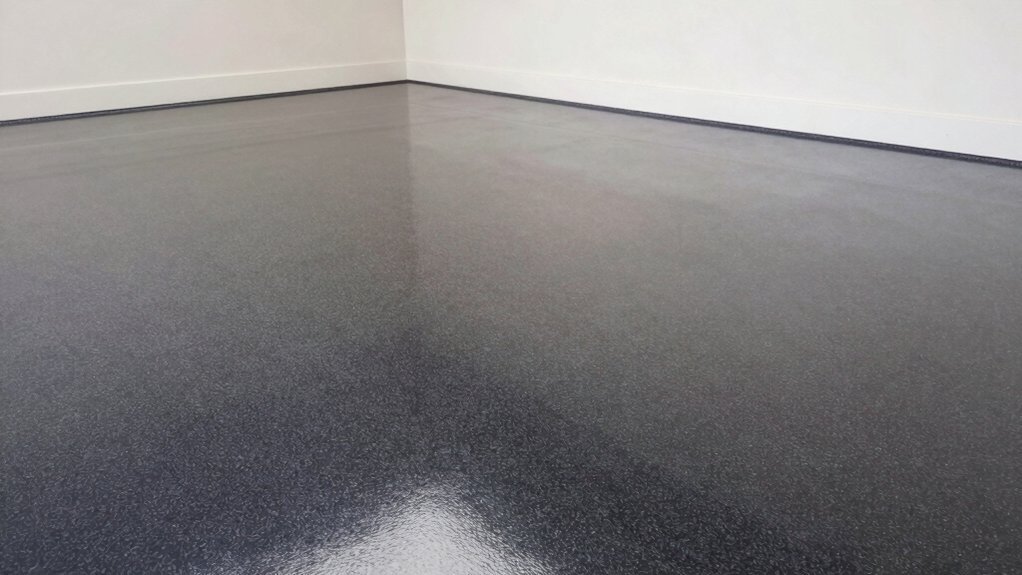
For a garage floor, choose a light neutral or cool white to brighten the space and improve visibility, especially under bright task lighting. These tones reflect more light and reduce shadowed areas, aiding safety and accuracy in projects. If you’d rather hide grime between maintenance cycles, neutrals and dark tones in matte finishes mask spills and wear while still looking professional. Epoxy offers durability for high-traffic areas, while acrylics and stains can ease repairs—you’ll see practical tradeoffs clearly as you proceed. Continue to learn more.
Which Garage-Floor Color Brightens the Space?
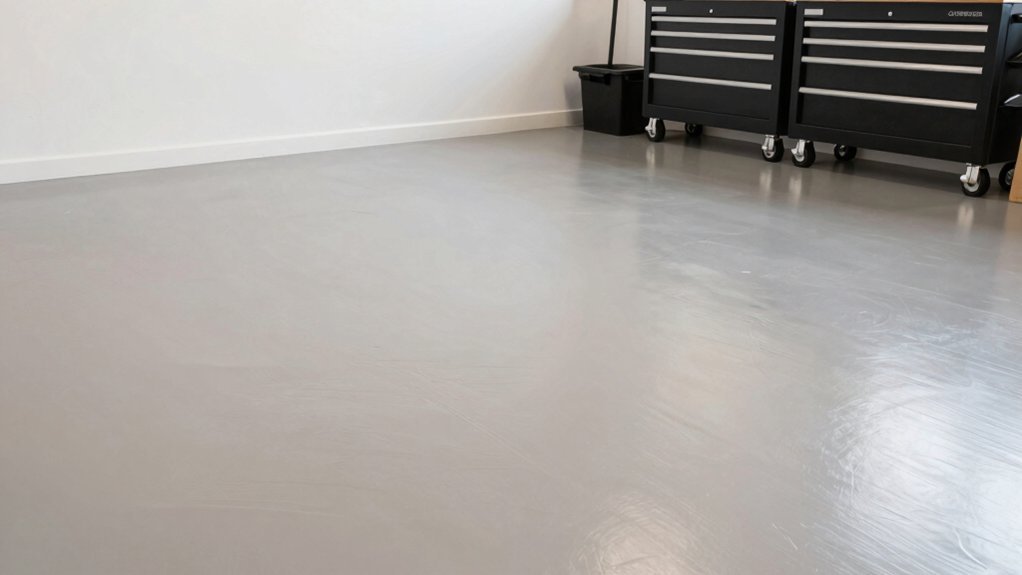
Light colors reflect more light, making a garage feel brighter and more open. You’ll maximize visibility by selecting hues that bounce ambient light without washing out details. In practice, bright whites and cool neutrals offer strong reflectivity, but you should balance glare with task contrast.
Lighting options matter: choose finishes that maintain specular clarity on floors and walls, not files of glare. Color psychology also guides your choice; cooler tones convey cleanliness and focus, while lighter warm whites create a welcoming, spacious impression.
Pair color with illumination zoning—task areas use higher-CCT whites, while general spaces stay softer. This approach preserves depth perception, reduces shadows, and enhances perceived space, all without sacrificing durability or maintenance.
How Neutrals and Dark Tones Hide Dirt on Garage Floors
Neutrals and dark tones hide dirt effectively by masking irregularities and staining rather than highlighting them. When you choose neutral grays or deep charcoals for your garage floor, you leverage color psychology to reduce perceptual contrast between soil, oil drips, and the surface.
The result is a calmer, more cohesive garage aesthetic that doesn’t shout every spill. Matte or satin finishes tend to diffuse reflections, further concealing fine dust and micro-scratches without sacrificing legibility of line-work or labeling.
In application, you’ll notice that evenly pigmented neutrals reduce the visual impact of traffic patterns and wear. This restraint supports maintenance cycles, ensuring a cleaner appearance between cleanings while preserving a professional, utilitarian look.
Gloss or Matte: Safety and Traction on Concrete
Gloss finishes offer higher reflectivity that can amplify slick spots, while matte surfaces trade some glare for better grip underfoot. You evaluate safety and traction by testing concrete texture, tread comfort, and moisture response across lighting effects and ambient conditions.
Gloss can reveal micro imperfections and dust, influencing maintenance planning, yet it enhances visibility in dim garages, aiding tool alignment and signaling hazards. Matte sheens reduce glare, improving perceived footing and reducing slip risk on wet or dusty days, though glare-limited areas may obscure spills.
Color psychology subtly guides user perception: cooler tones under bright lighting can feel cleaner, while warmer mattes can seem more reassuring in variable light. Ultimately, you balance traction needs with intended lighting to select an appropriate sheen.
Durability and Maintenance: Epoxy, Acrylic, and Stains Compared
You’ll compare durability across epoxy, acrylic, and stains by focusing on how long finishes hold up under foot traffic, chemical exposure, and temperature shifts.
Maintenance and cleaning decisions hinge on how easy each option is to refresh, scrub, and reseal without downtime.
Consider application effort versus longevity to gauge if a premium epoxy or a simpler stain best fits your garage workflow.
Durability Of Finishes
Durability in garage floor finishes hinges on the right balance of chemical resistance, abrasion tolerance, and maintenance needs. You’ll evaluate epoxy, acrylic, and stains by how they resist chemicals, endure traffic, and how easily they recover from wear.
Color psychology factors into perceived longevity, as richer tones can reveal flaws sooner, while lighter shades may brighten spaces without hiding impact. Paint formulation choices drive adhesion, cure stability, and UV resistance, shaping long‑term performance.
For installations, expect epoxy to excel in wear and chemical resistance, acrylics to offer quicker cures, and stains to preserve texture with moderate durability. Align these traits with usage patterns to maximize lifespan and appearance.
- Chemical resistance profiles
- Abrasion tolerance and wear patterns
- Cure time and maintenance impact
- Aesthetic longevity and color choice
Maintenance And Cleaning
Maintaining a garage floor finish means balancing cleanup routines with the ongoing demands of each system—epoxy, acrylic, or stain—so that chemical exposure, foot and vehicle traffic, and routine maintenance don’t erode performance or appearance.
In practice, you’ll restrict harsh cleaners, promptly wipe spills, and use mild degreasers that suit your coating type. Epoxy demands gentle scrubbing and occasional resealing to preserve gloss and chemical resistance.
Acrylics benefit from regular dusting and light washing to prevent hazing. Stains rely on prompt blotting of spills and periodic topcoats to sustain color depth.
Establish a routine that aligns with use patterns, especially around garage storage areas and pathways. This approach enhances vehicle protection while preserving the finish’s aesthetic integrity.
Application Versus Longevity
Application choices directly shape how long a garage floor resists wear and remains visually intact, balancing initial performance with long-term maintenance needs across epoxy, acrylic, and stain systems. You weigh durability, UV resistance, and sheen retention against cleanup ease and color longevity, while considering garage aesthetics and color psychology as guiding factors.
- Epoxy offers high hardness and chemical resistance but requires proper substrate prep for longevity.
- Acrylics cure quickly and are easier to repair, yet fade sooner in sunlight.
- Stains enhance grain and texture, preserving visuals with minimal gloss loss.
- Routine resealing or topcoats extend life, reduce staining, and maintain color integrity.
Choose with concrete knowledge and aesthetic goals to optimize durability and appearance over time.
Color Guides by Use Case: DIY, High-Traffic Shops, Bright-Light Garages
You’ll weigh DIY color choices against practicality, focusing on ease of application, visibility, and upkeep.
For high-traffic garages, we’ll compare wear resistance, slip resistance, and long-term aesthetics to minimize touch-ups.
In bright-light spaces, you’ll consider glare, reflectivity, and color perception to optimize perceived cleanliness and depth.
DIY Color Considerations
When choosing paint for DIY, high-traffic shops, or bright-light garages, start with colors that enhance durability and visibility while reflecting the space’s function. You’ll balance hue with gloss to resist wear and simplify cleanup, while prioritizing contrast for safety and workflow.
For DIY projects, pick mid-tones that hide dust but stay legible for signage and markers. Consider how color supports garage decor and lighting considerations, not just aesthetics.
- Choose durable, washable finishes with slight sheen for cleanability
- Use high-contrast trim to delineate zones and cues
- Pair neutral bases with accent colors for branding and organization
- Test color under your lighting to ensure real-world visibility
These choices optimize function, forego glare, and reinforce a cohesive, practical space.
High-Traffic Garage Needs
High-traffic garages demand durable, high-visibility coatings that withstand moisture, chemical exposure, and constant movement. You choose coatings with dense crosslinking, skid resistance, and easy cleanability to minimize downtime.
Epoxy and polyaspartic systems excel here, offering abrasion resistance and chemical tolerance critical for tire tracks, oil spills, and frequent foot traffic. Use color accents that cue zones—walkways, work zones, and storage areas—without overwhelming the space.
In garage color psychology, high-contrast schemes reduce missteps and improve safety, while lighter floor tones reflect light for a brighter environment. Align with paint color trends toward engineered neutrals or subtle, saturated hues that hide grime between maintenance cycles.
Prioritize seamless topcoats, UV stability, and slip resistance ratings to preserve appearance and performance over time.
A 6-Step Framework to Choose Your Final Garage-Floor Color
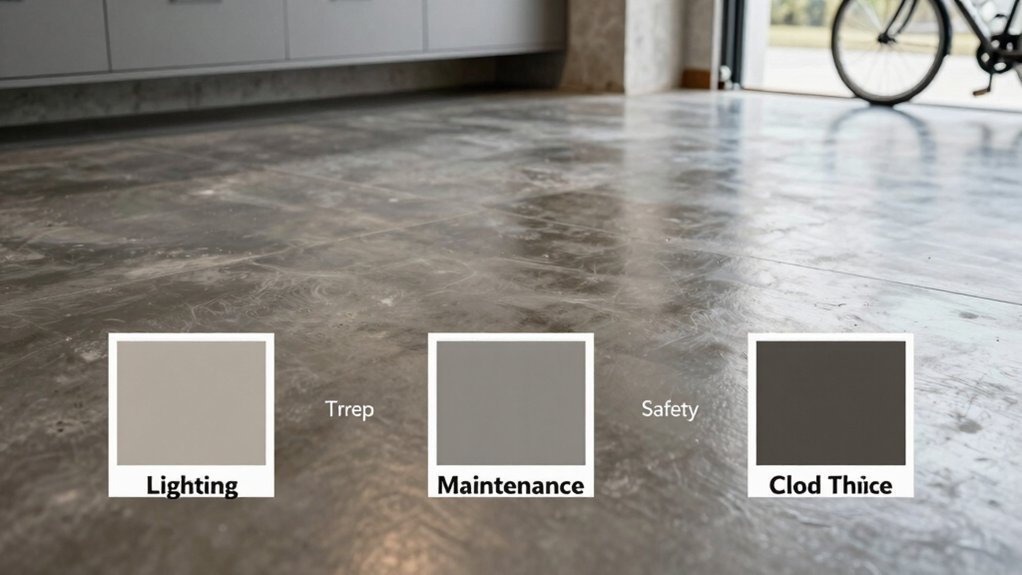
Choosing your final garage-floor color isn’t just about looks; it’s a practical decision that affects durability, maintenance, and overall workshop mood.
A 6-step framework helps you decide with precision:
- Define use cases: storage, staining risk, glare control, and traffic patterns.
- Assess lighting and space: reflectivity, contrast, and perceived size.
- Align with psychology: paint color psychology guides mood and focus.
- Evaluate durability needs: epoxy vs. latex, slip resistance, cleaning ease.
- Test samples: small swatches in your workflow zones.
- Decide with a plan: document final color, finish, and maintenance schedule.
Garage flooring trends guide longevity and resale value.
Choose a color that balances visibility, safety, and aesthetics.
Consider complementary accents and zoning ideas.
Verify durability and warranty before committing.
Frequently Asked Questions
How Long Does Color-Coated Concrete Last Before Repainting?
Color-coated concrete typically lasts 3–5 years before repainting, depending on traffic and prep. For garage floor maintenance, expect minor touch-ups annually; durable finishes boost color longevity, resist abrasion, and simplify maintenance while preserving aesthetic appeal.
Can Garage Floor Color Affect Tool Visibility and Safety?
Yes, garage floor color can affect tool visibility and safety. You’ll gain better tool contrast and safety visibility when choosing hues with high luminance contrast to common tools, reducing misplacement and accident risk while preserving a technical, aesthetic look.
Do Color Endings Impact Slip Resistance on Painted Floors?
Color endings don’t directly affect slip resistance, but finish texture does. You’ll notice aesthetic appeal and color psychology guide perception; choose non-slip textures and contrast for safety, blending technical surface science with visual appeal.
Are There Color Options for Radiant-Heated Garage Floors?
Yes, you have color options for radiant-heated floors. You’ll choose durable, heat-compatible finishes that resist thermal movement, then pair them with aesthetically pleasing neutrals. Color options include light grays, warm beiges, and charcoal tones for contrast.
What Environmental Factors Limit Certain Garage-Floor Colors?
You’ll find environmental factors like UV fading and moisture exposure limit certain garage-floor colors, especially light or highly pigmented finishes. Choose UV-resistant, moisture-resistant coatings to minimize fading and warping, maintaining aesthetics and technical performance over time.
Conclusion
Choosing the right garage-floor color hinges on brightness, dirt concealment, and practicality. Light neutrals brighten tight spaces; mid-tones hide grime without sacrificing clarity; darker tones reduce dust show, yet can recede walls. Glossy finishes boost light reflection; matte improves safety with traction. Epoxy gives durability, while stains offer subtle variation. Start with a neutral base, test sheen, and align with your use case. Your final pick should balance visibility, maintenance, and style—because a well-chosen color sharpens function and mood.