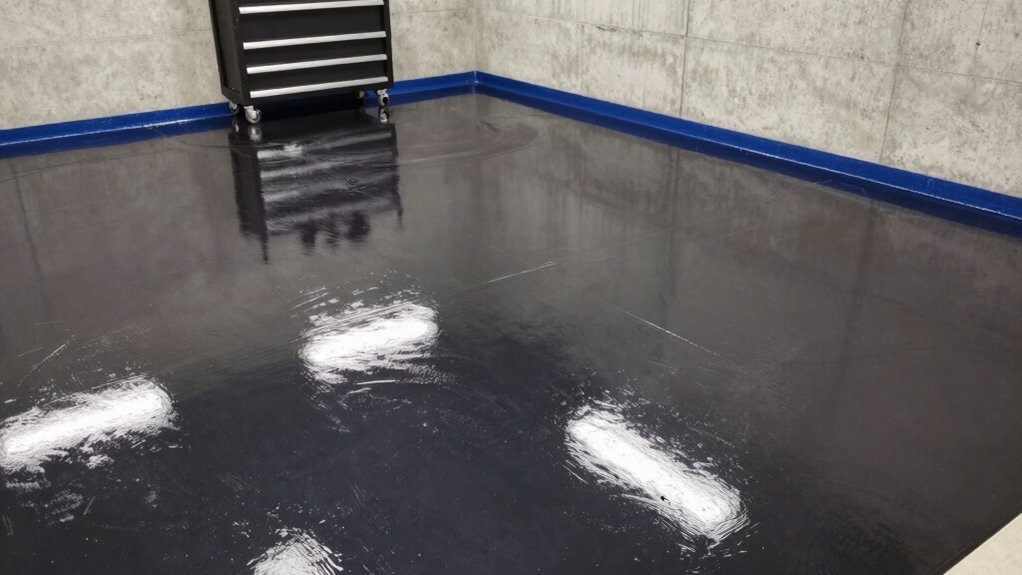
Garage floor coating costs range from about $3 to $12 per square foot. Expect epoxy kits at roughly $2–$6 per sq ft and premium polyaspartics around $8–$12 per sq ft. Prices hinge on prep work, moisture checks, repairs, texture, thickness (8–20 mil), and warranties. Add-on items like primers, chips, sealers, and equipment rental push costs higher. Plan for a contingency of 10–15% for surprises. If you keep reading, you’ll learn how to pick a plan that fits your budget and needs.
Decide First: Which Garage Floor Coating Is Right for You?
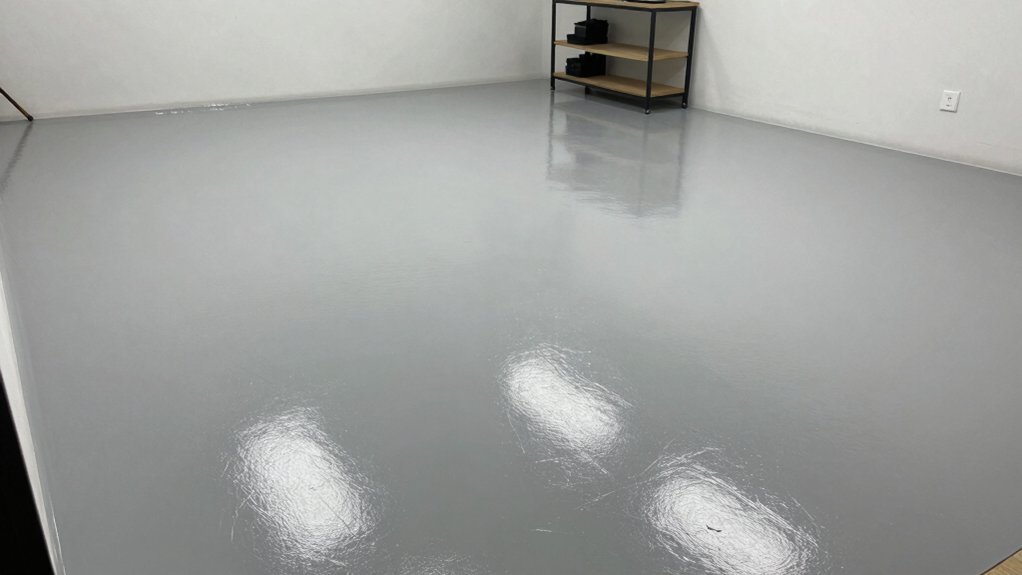
Choosing a garage floor coating starts with your priorities: durability, aesthetics, and ease of maintenance. You’ll compare material families by quantified performance: abrasion resistance, hardness, chemical tolerance, and expected lifespan.
For garage durability, note measured Durometer values, wear tests, and warranty ranges; for coating aesthetics, evaluate color fastness, gloss retention, and texture options.
You’ll compute installation windows, cure times, and surface prep requirements to minimize downtime. Create a decision matrix ranking options on slip resistance (R10–R13), UV stability, and thermal expansion compatibility.
Consider maintenance cost per year, cleaning frequency, and resistance to oil, brake fluids, and solvents. Narrow to two feasible systems, then verify substrate compatibility and local installer qualifications.
Your final choice should balance durability, aesthetics, and maintenance predictability within your budget.
Epoxy vs Polyaspartic: Core Differences and Starter Guidance
Epoxy and polyaspartic coatings differ in cure chemistry, cure time, and performance envelopes, so you’ll want to map each—not just pick one—against your priorities. You’re evaluating discipline, durability, and install logistics with a clear framework.
4-item starter guide:
1) Cure timing: pot life, tack-free windows, full cure duration.
2) Hardness and abrasion: scratch resistance targets, gloss retention, impact tolerance.
3) UV stability and aesthetics: color fade risk, gloss degradation, garage aesthetics.
4) Environmental footprint: volatile emissions, solvent use, waste handling.
Key takeaway: epoxy offers cost efficiency but longer cure and odor; polyaspartic trades speed for higher material cost. Assess your schedule, traffic, and environmental impact to choose confidently.
What Each Price Tier Includes: Epoxy and Polyaspartic Breakdown
You’ll see how epoxy and polyas Part ic price tiers map to material inclusions, from resin volume to topcoat tech.
We’ll quantify typical per-square-foot costs and list what each tier covers, like primers, chips, and sealers, so you can compare options explicitly.
This section starts the breakdown by tying price bands to concrete inclusion counts and performance features.
Epoxy Vs Polyaspartic Costs
Pricing for epoxy and polyaspartic garage floor coatings varies by material, control of surface conditions, and application complexity, but you can map it to three clear price tiers: economy, mid-range, and premium.
1) Economy: epoxy base, basic prep, single-coat finish, shortest coating longevity, lowest upfront cost.
2) Mid-range: epoxy enhanced with partial dehumidification, improved prep, multi-layer finish, better garage durability and coating longevity.
3) Premium: polyaspartic system, fiber-reinforced or polyaspartic hybrid, meticulous surface prep, thicker protection, maximum coating longevity and durability under heavy use.
4) Practical impact: you’ll see faster cure times, easier maintenance, and clearer shine as you move up tiers.
Tiered Material Inclusions
Tiered material inclusions align with price bands by detailing exactly what’s included at each level. You’ll see distinct packages for epoxy and polyaspartic systems, with quantified components and yields.
Entry-level epoxy includes a 2-coat system, standard chip blend, and 100% solids topcoat, targeting approximately 8–10 mil dry film thickness and covering 1,000–1,200 square feet per kit.
Mid-tier epoxy adds enhanced chip sizes, color options, moisture mitigation, and a 12–14 mil thickness goal.
High-end epoxy combines seamless schedule upgrades, premium pigments, and extended cure times for improved garage durability.
Polyaspartic tiers specify faster cure times, UV-stable color options, and 15–20 mil thickness targets, enabling easier cleaning and longer life.
Expect total coverage metrics, warranty terms, and maintenance intervals to guide decision-making.
What Drives Costs: Slab Prep, Repairs, and Surface Texture
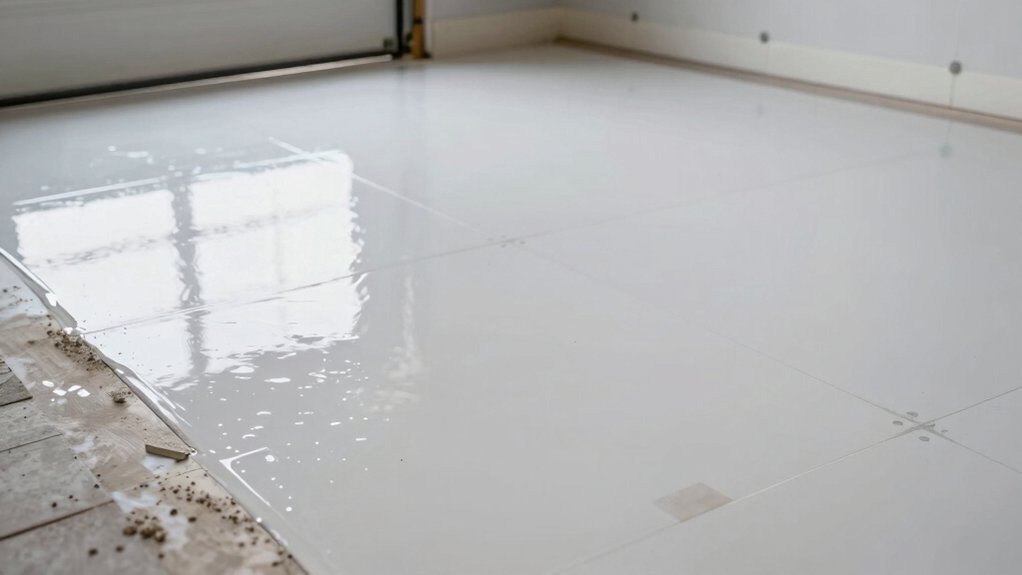
Slab prep, repairs, and surface texture are the main cost drivers because each step adds measurable labor, materials, and time. You’ll pay for solid prep: moisture checks, patching, and grinding to create a uniform base.
Repairs add material costs and extended application windows. Surface texture choices determine surface area exposure and cure times, impacting labor hours.
- Slab prep steps that set the frame for adhesion
- Targeted repairs to restore flatness and strength
- Texture decisions that balance grip and aesthetics
- Finishing options like slab sealing and decorative flakes
Understanding these factors helps forecast total costs with transparency. Slab sealing is often included later, while decorative flakes affect both appearance and the amount of coating required.
Your cost reflects the sequence, complexity, and time-to-dry for each stage.
Budget Plans You Can Grab: Low, Mid, and High-End Options
Moving from the practical costs of slab prep, repairs, and texture, you can approach budgeting with three concrete plans: low, mid, and high-end. You’ll map costs per square foot: low around $2–3, mid at $4–6, high-end $7–12, assuming standard epoxy or urethane systems.
Quantify scope: primer, broadcast texture, topcoat, and a protective clear layer. In the low plan, expect basic durability and shorter warranty; mid adds color options and subtle gloss. High-end emphasizes premium coatings, UV stability, and extended warranties, plus optional anti-slip textures.
For cost-effective options, compare material lives, maintenance needs, and installation timelines. Premium upgrade considerations include warranty length, color stability, and environmental resistance.
Decide based on expected traffic, chemical exposure, and resale value, then align with your budget ceiling.
Hidden Installation Costs You Might Face
Hidden installation costs can catch you off guard, so plan for them upfront. You’ll want a precise view of what can arise, not vague estimates. Expect hidden fees to surface if prep work expands or substrates demand extra treatment. Contract surprises often show up as change orders, delaying timelines and raising totals.
- Unexpected surface repairs that require additional materials and labor
- Extra prep steps for moisture or contamination not identified early
- Substrate leveling or patching that exceeds initial scope
- Permit, inspection, or disposal charges billed separately
Track every line item, confirm pricing in writing, and request a risk matrix from your contractor. By accounting for these factors, you minimize contractor surprises and keep the project on budget.
Step-by-Step Budget Checklist to Estimate Your Project
Begin with a clear budget baseline by listing expected material and labor costs, plus a contingency of 10–15% for unexpected expenses.
Break totals into concrete line items—epoxy or coating, primers, prep work, resurfacing, and labor hours—so you can compare quotes precisely.
Track quantities, unit prices, and timelines to validate estimates and identify cost-saving opportunities before you commit.
Budgeting Basics
A solid budget starts with a clear scope: list all garage floor coating tasks, materials, and labor you’ll need, then assign realistic prices to each item. You’ll quantify every line item to prevent scope creep and overruns, keeping the plan auditable and repeatable.
1) Define tasks: surface prep, primer, coating, cure time, and final inspection.
2) Itemize materials: cleaners, tape, rollers, coatings, primers, hardeners, and contingencies.
3) Allocate labor: hours for prep, application, and QA, with wage assumptions.
4) Add non-negotiables: Garage storage and lighting fixtures considerations that affect layout and timing.
Keep estimates based on unit costs, add a 10% contingency, and document assumptions for transparency.
Material And Labor Costs
To estimate material and labor costs accurately, list every required item and task, assign unit prices, and multiply by quantities to derive subtotals—then sum for a total project cost.
Begin with surface preparation: remove contaminants, repair cracks, grind high spots, and vacuum dust.
Next, specify coatings, primer, and sealant forms, plus additive costs for enhanced durability and cure modifiers.
Include labor hours for prep, application, and curing, plus contingencies for rework.
Account for surface area, substrate condition, and coating thickness, converting to cost per square foot.
Include rental equipment, protective gear, and disposal fees.
Factor material durability into warranty implications and long-term maintenance.
Sum subtotals, compare to budget, and adjust quantities before finalizing.
This method yields a precise, defensible estimate.
Frequently Asked Questions
How Long Does a Garage Floor Coating Last Before Reapplication?
A typical garage floor coating lasts 5–15 years, depending on traffic and maintenance. Durability factors include prep, product type, and climate. Expect roughly 7–10 years for epoxy; longer for polyurethane. Coating lifespan varies with usage and upkeep.
Can I Apply Coating Myself or Hire Professionals Only?
Yes, you can DIY or hire pro services. Compare DIY options versus professional services by cost, credentials, and warranty; assess surface prep, coating type, cure times, safety gear, and finish quality to decide what fits your timeline and budget.
Will Coating My Garage Floor Affect My Home Insurance?
Your coating won’t typically rewrite your policy, but it can trigger insurance implications and coverage adjustments if it alters risk or fireproofing. You’ll need to notify insurer, document materials, and confirm continuous coverage, deductibles, and rebates.
Do Coatings Resist Oil Stains and Tire Marks?
Oil resistance and tire durability are strong. You’ll see oil resistance up to high levels and tire durability improvements, measured with abrasion tests. You measure, compare, and choose coatings that offer quantified oil resistance and tire durability.
What Maintenance Is Required After Installation?
You should perform routine maintenance by sweeping and mopping to preserve Garage cleaning results, inspect edges monthly, and reseal every 2–5 years to guarantee Coating durability remains high and moisture, oil, and abrasion resistance stay consistent.
Conclusion
You’ll walk away with a clear budget after considering prep, coating type, and slab condition. On average, you’ll see epoxy projects around $3–12 per sq ft and polyaspartic around $5–15 per sq ft, plus install and repair costs. An interesting stat: most garages spend under $3,000, but 40% hit the high end due to slab repairs. Use the step-by-step checklist to forecast exact numbers for your space and avoid surprise fees.