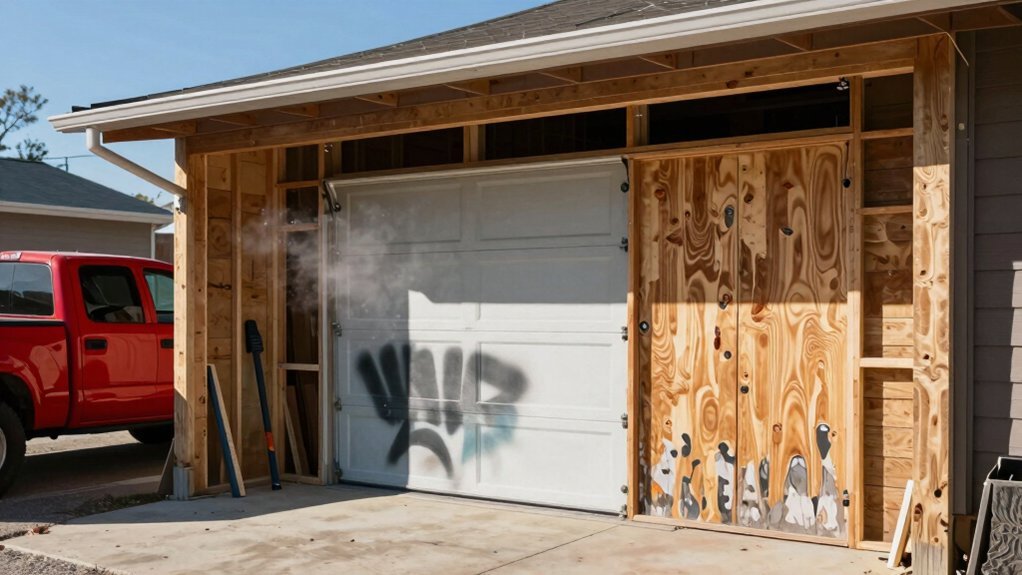
Builders don’t paint the garage up front because it’s a high-winish, high-risk area. They focus first on structure, moisture control, and durability, using primers and finishes that resist wear, chemicals, and temperature swings. Paint might delay other trades or get damaged by weather, moisture, and surface prep gaps. A painted garage later protects concrete, drywall, and metal, but the job is timed with build milestones to avoid rework. If you keep going, you’ll uncover more practical timing and prep tips.
Do You Need to Paint the Garage? A Quick Decision Framework
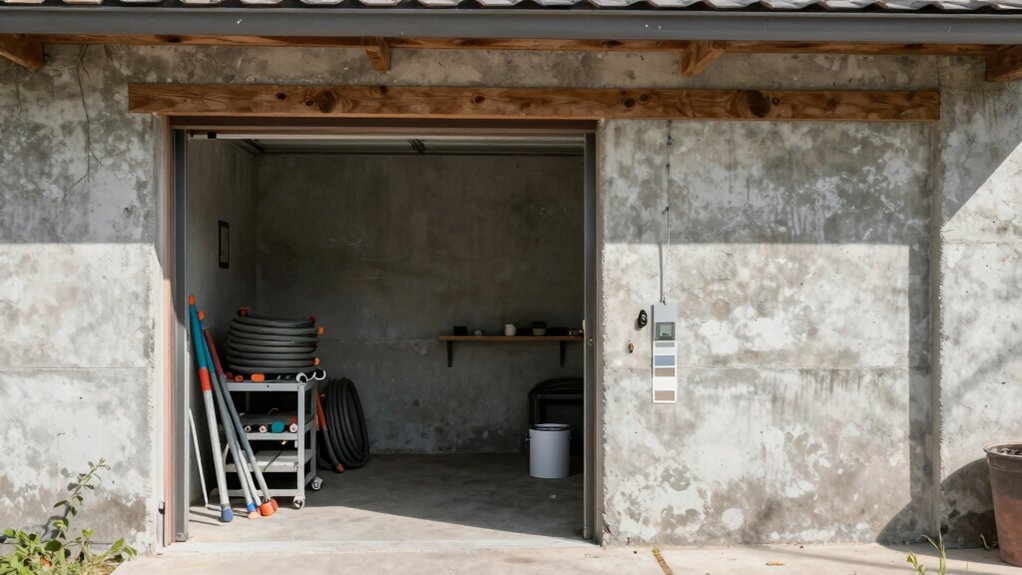
If you’re deciding whether to paint the garage, start with a simple yes-or-no check: does the surface show exposed wood, peeling, or rust, or is it otherwise protected and in good shape? If yes, you can delay painting until you notice deterioration or color mismatch affects value.
If no, you still assess ongoing maintenance. You’ll weigh cost considerations: primer, paint, labor, and frequency of touch-ups. Compare these costs with the aesthetic impact: fresh paint can improve curb appeal, signal durability, and align with home style.
Consider weather exposure, sun fading, and substrate condition. A practical threshold helps: repaint when coating integrity or uniform appearance deteriorates.
Use this framework to decide promptly, avoiding unnecessary work while preserving protection and appearance.
How Moisture and Temperature Affect Garage Finishes
Moisture and temperature drive how garage finishes perform. You’ll see finishes expand, contract, or crack when humidity swings or temps spike. Moisture control helps prevent paint blistering, wood warping, and substrate failure, especially on sealed concrete or drywall joints.
Temperature regulation matters for cure times, adhesion, and hardness; cold temperatures slow curing, while excessive heat accelerates gloss loss and cracking. You should assess ambient conditions during application and the first 48 hours of curing, aiming for stable, moderate ranges as recommended by product sheets.
Across seasons, control moisture ingress with proper sealing, vapor barriers, and drainage, then maintain consistent interior temperatures using insulation and HVAC adjustments as needed. Inconsistent moisture or temperature exposes finishes to premature wear and accelerated aging.
Real-World Wear and Chemical Exposure in Garages
Real-world wear patterns show how doors, handles, and edges endure foot traffic, tools, and impact over time.
Chemical exposure realities—oil, solvents, fuels, and cleaners—alter finishes and surface integrity at contact points.
In your garage environment, these factors interact, influencing wear, cleaning needs, and long-term finish performance.
Real-World Wear Patterns
Garage environments expose coatings and surfaces to a mix of wear modes: foot traffic, tool contact, and repeated cleaning. You’ll notice real-world wear patterns emerge quickly, driven by abrasion, impact, and scuffing from daily use. Foot traffic concentrates on thresholds, corners, and entry paths, thinning coatings and dulling edges where mats and boots drag grime.
Tool contact leaves micro-scratches and localized thinning, especially where belts, hammers, and metal components rest. Repeated cleaning introduces friction and solvent exposure that can erode gloss and color fastness if unsealed.
You should track how surface durability holds up under these stresses, not just initial appearance. Prioritize surfaces that resist chipping and staining, align with aesthetic considerations, and maintain cleanability without sacrificing practicality.
Real-world patterns guide material choices and maintenance plans for long-term performance.
Chemical Exposure Realities
Chemical exposure in garages can dramatically alter coatings and substrates, often more than visible wear suggests. You’ll encounter solvents, fuels, cleaners, and additives that penetrate surfaces over time, degrading adhesion and curing in ways not obvious at first glance.
You should map exposure paths: aerosol, vapors, splashes, and hand contact, then trace how each interacts with paints, sealants, and primers. Prioritize material data sheets to understand compatibility, degradation rates, and temperature effects.
You’ll need to recognize chemical hazards beyond odors or appearances, because some agents act cumulatively or trigger subtle embrittlement. Implement safety protocols that cover ventilation, protective equipment, and spill containment, and train crew to stop work when exposure thresholds are approached.
Controlled, proactive measures protect coatings, substrates, and worker health.
Garage Environment Effects
Even with clean surfaces, your garage environment continually tests coatings through real-world wear and chemical exposure. You’ll see how foot traffic, tools, and frequent entry throw abrasions that reveal substrate interactions. Spills, solvents, and fuel vapors challenge paint durability, causing softening, staining, or chalking if coatings aren’t chosen for garage duty.
Proper garage ventilation helps dilute fumes and reduces solvent attack, while ventilation quality also impacts drying and cure, influencing long-term performance. You aim for a coating system that resists impact, abrasion, and chemical intrusion without excessive maintenance.
Real-world use demands practical selection: high-adhesion primers, durable topcoats, and compatible sealers. A thoughtful approach preserves aesthetics and protects substrates under everyday pressures, from car leaks to oil drips and cleaning residues.
- Foot traffic and tool interaction cause localized wear
- Spills, fuels, and solvents stress finishes
- Vapor exposure accelerates solvent-related degradation
- Ventilation affects cure and odor control
- Primer/topcoat compatibility governs durability
How Garage Painting Fits Into Your Build Schedule
As you plan the build, aligning garage painting with the schedule keeps trades on track and minimizes delays. You’ll coordinate interior work flow so painters arrive after rough framing and before final finishes, avoiding backtracking.
Establish a cut‑over window where primer application happens early enough to seal surfaces without stalling adjacent trades. Decide on a paint sheen that suits durability needs and maintenance expectations, then lock in coating sequences that minimize drying time conflicts with lighting, electrical, and shelving installs.
By aligning tasks, you create predictable handoffs between carpenters, drywallers, and painters, reducing cold starts and rework. Document milestones, assign owners, and monitor progress with short daily checks.
Clear, timely communication prevents surprises and keeps the project on schedule.
Costs, Risks, and Tradeoffs of Delaying the Paint Job
delaying the paint job carries clear costs, from potential added labor or rework to higher material risks if weather or moisture affects exposed surfaces.
You’ll weigh the costs of postponement against the risks of postponing completion, such as longer exposure to damage or misaligned scheduling with other trades.
The tradeoffs for timing hinge on how soon you can secure a solid finish without disrupting overall build progress.
Costs To Delay Paint
Delaying a paint job on your garage saves money upfront, but it also raises costs and risks you’ll likely notice later. Each month you wait can amplify prep issues, hidden rust, and mismatched textures, driving repair bills higher than the paint itself.
You’ll miss opportunities to showcase decorative finishes or establish color coordination that complements the home. Over time, exposure accelerates wear, leading to peeling and accelerated fade, which compounds labor costs during cleanup and repaint.
Additionally, delayed maintenance may stall project sequencing, delaying other upgrades. You’ll also face supplier price fluctuations and potential schedule clashes with contractors, increasing total project duration and expense.
- Additional prep work and rust remediation add unexpected costs
- Labor headaches from weather-driven delays
- Higher chances of paint failure requiring early recoat
- Limited color choices as materials rotate
- Compromised curb appeal and resale value
Risks Of Postponement
Postponing your garage paint job introduces tangible costs and tradeoffs you’ll feel over time. Delays allow deterioration to accumulate, raising repair needs and compounding final expenses. You risk surface failure, where moisture ingress or substrate cracking accelerates, demanding higher prep effort later.
Safety hazards can arise if aging coatings peel or blister, creating trip or slip risks and complicating maintenance tasks. Aesthetic considerations deteriorate with time, making your garage look neglected and potentially lowering perceived value.
Budget predictability worsens as price volatility, scheduling gaps, and contractor availability push costs upward. You also miss opportunities to upgrade finishes that resist wear.
If you plan future resale, delayed work can complicate inspections and financing. Weigh immediate, controlled work against escalating, less predictable outcomes.
Tradeoffs For Timing
The timing of your garage paint job comes with clear costs, risks, and tradeoffs that grow the longer you wait. Delays can compound labor and material bills, and you might miss seasonal readiness windows that affect curing and finish longevity.
You weigh cost considerations against potential aesthetic impact, especially if the garage is visible or connected to living spaces. Procrastination can increase exposure to moisture, leading to corrosion or paint peeling later on.
Yet rushing may undermine prep quality, causing uneven coverage or shorter lifespan. A deliberate schedule can align with budget cycles, crew availability, and warranty terms, reducing rework.
Thinking through these tradeoffs helps you optimize durability, appearance, and total cost.
- Cost considerations versus short-term savings
- Seasonal timing and curing constraints
- Impact on resale appeal and aesthetic impact
- Risk of surface deterioration if delayed
- Scheduling alignment with contractor availability
When Painting the Garage Actually Makes Sense
When painting the garage makes sense, it’s usually about protection and upkeep rather than aesthetics alone. You’ll choose paint when surfaces show wear, moisture intrusion, or chemical exposure threatens longevity.
In such cases, coating concrete, drywall, or metal helps block stains, inhibits mold, and slows corrosion, sustaining structure and function. You’ll weigh practical goals: durability, ease of cleaning, and cost over time.
If you expect foot traffic, vehicle leaks, or seasonal temperature swings, a durable finish reduces maintenance cycles and extends life. Consider subtle impacts on garage aesthetics, but prioritize performance—resistance to abrasion, moisture, and chemicals.
Remember paint durability matters less for looks and more for long-term protection, while you preserve usable space and value without overcustomizing the core function.
Best Prep Methods and Material Choices for Garage Finishes
Choosing the right prep method and materials sets the foundation for durable, low-maintenance garage finishes. You prep once, you avoid frequent touchups. Start with clean, dry surfaces, then assess for moisture and defects.
Primer application matters: choose a primer compatible with the topcoat and substrate, and apply it evenly to seal porosity.
Surface sanding smooths irregularities and improves adhesion without creating ridges. For concrete, use a densifier or epoxy primer if needed; for metal, rust-inhibitive primers are essential.
Select finishes with chemical resistance and scrubbable cleanliness for high-traffic areas. Use low-VOC options to minimize fumes and odor during curing.
Consistent film build and proper drying times prevent peeling and staining.
- Surface prep sequence and timing
- Primer application compatibility checks
- Surface sanding grit guidance
- Substrate-specific primer choices
- Low-VOC finish selection and curing cues
Budget-Friendly Painting Strategies for a Garage
Consider budget-friendly paint picks that still hold up under garage use, focusing on durable finishes and low odor. You’ll save time and money with quick prep tricks that minimize mess and maximize coverage.
Let’s compare cost, coverage rate, and cleanability to kick off a practical plan.
Budget-Friendly Paint Picks
Garage painting doesn’t have to drain your budget. You’ll choose durable, cost-effective finishes that transform a garage without overspending. For budget-minded results, prioritize mid-range acrylics with good coverage and washability, and look for sales or contractor-grade discounts.
Consider flat or satin sheens to hide minor imperfections and simplify cleanup. Two clear picks are a mildew-resistant exterior-safe enamel for doors and trims, plus a high-coverage interior acrylic for walls. Pair paints with compatible primers to reduce coats.
Remember practical details: compatibility with garage insulation and existing lighting fixtures, and easy-touchups over time. Coordinate color with purpose—lighter walls brighten spaces, darker accents define zones, and reflective ceilings boost visibility.
- Choose mildew-resistant enamel and high-coverage acrylic
- Look for contractor-grade discounts on bulk purchases
- Match primer to surface and paint type
- Plan for easy touch-ups and future repairs
- Coordinate colors with lighting and insulation effects
Quick Garage Prep Tricks
To prep a garage on a budget, start with a quick but thorough clean, then address surface issues that could waste paint or trap dust. You’ll notice cracks, peeling coatings, and uneven patches that invite moisture and adhesion problems. Patch with a fast-drying filler, sand smooth, and wipe away particles before painting.
Prioritize prep steps that save coats and money: repair concrete chips, seal gaps, and remove oil-based residues with a degreaser. Consider garage insulation to stabilize temperatures and reduce layering needs.
Check ventilation systems to ensure safe, fumes-free application and proper cure times. Use a low-odor, moisture-resistant finish suitable for metal and concrete.
Time-saving tactics matter: cover HVAC intakes, mask edges, and work in sections to prevent rework. Efficient prep lowers costs and boosts durable results.
Planning for Future Garage Painting in a New Build
Planning for future garage painting in a new build should start with a realistic assessment of paintability and access. You’ll map how walls, ceilings, and trims will hold coatings, and note potential obstruction points like wiring or pipes.
Consider how future upgrades may affect surface preparation, primer choice, and topcoat compatibility. Plan ventilation strategies early to avoid moisture traps.
Evaluate insulation interactions with paint cycles to prevent cracking. Forecast labor needs, storage for materials, and site timing to minimize disruption.
- Assess surface types and substrate readiness for long-term adhesion
- Align insulation choices with painting tolerances and future access
- Plan ventilation strategies to manage fumes and humidity
- Schedule phased work to avoid rework and weather delays
- Document coatings, primers, and adhesion test results for future-proofing
Quick Checks: Decide Now or Plan for Later
When deciding now versus planning for later, weigh immediacy against potential changes. You’re balancing urgency with flexibility, so run a quick check: can you lock in price and lead times today, or will tomorrow bring volatility?
Short-term decisions save disruption but may trap you in higher costs if materials or labor spike. Consider cost implications of delaying: you might face updated standards, contractor availability, or project staging that increases total expense.
Aesthetic considerations matter too—will you regret a rushed color or finish chosen in a hurry? Ask, what could shift visually or structurally in the interim?
If major risks exist, decide now; if not, plan for later with clear milestones, budget buffers, and predefined finish options.
Frequently Asked Questions
What Finishes Resist Heavy Chemical Spills in Garages?
Heavy-duty epoxy coatings resist spills best; consider polyurethane or ceramic tile for concrete floors. For walls, use elastomeric paints with chemical resistance. Also choose garage wall textures and paint color choices that hide stains and clean easily.
Do Odor Concerns Affect Indoor Air Quality Long-Term?
Odor concerns can signal long-term effects on indoor air quality. You’ll notice subtle health hints, headaches, or fatigue, so monitor indoor air quality, ventilate well, and curb strong cleaners to maintain safer, steadier comfort at home.
Can Painting Void Warranty or Insurance Coverage?
Painting can affect warranty implications and insurance considerations. You should check your contract, document materials, and surfaces; confirm with builders and insurers. If uncertain, avoid DIY changes or hybrids that could breach coverage or void protections.
How Often Should Garage Floors Be Repainted?
Most garages benefit from repainting every 2–5 years; a 60% moisture claim in floors prompts earlier updates. In your garage maintenance plan, set painting frequency based on wear, traffic, and floor coatings for durability.
Are There Eco-Friendly Paint Options Suitable for Garages?
Yes, you can use eco friendly paints for garages. Look for low-VOC or zero-VOC formulas and durable finishes. Eco friendly paints and Sustainable coatings reduce fumes, wear well, and protect concrete, tools, and occupants without compromising performance.
Conclusion
In the end, you’re choosing what your garage becomes as you stand at the door. Imagine cement floors cooling your feet, paint fumes waiting like a shadow behind the door, and the first brush stroke signaling not just color but durability. You’ll weigh moisture, wear, and schedule, then decide: finish now or lock it in for later. Either way, you’re engineering a space that holds up to the daily grind and still greets you with pride.